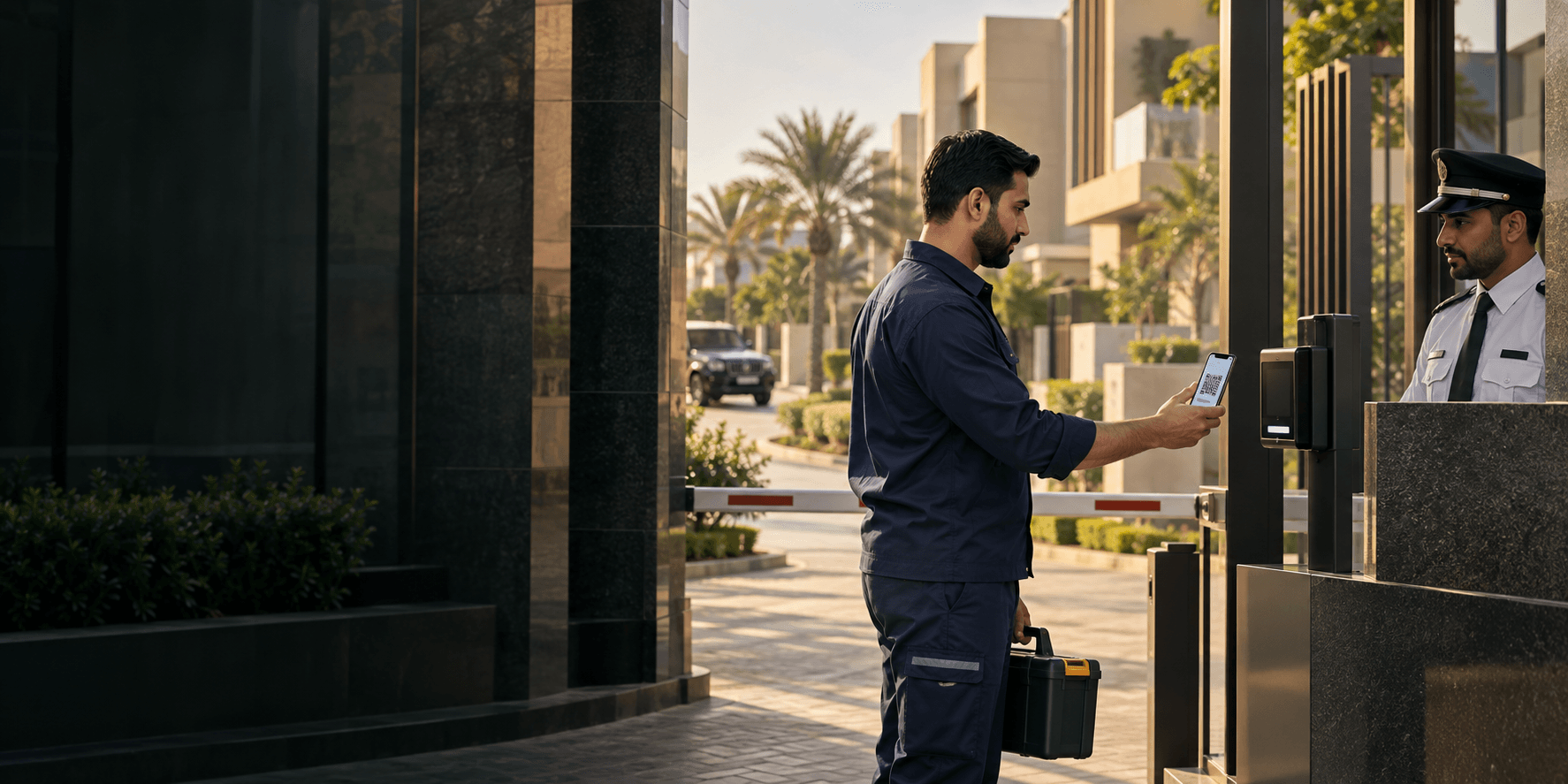
The paper number ticket is one of the most familiar objects in any service centre, and one of the most outdated. It was designed for a world where waiting was simply expected, where the only question was the order in which people would be served. In the UAE's premium residential and hospitality market, that assumption no longer holds.
Customers who are used to booking everything from their phone do not understand why they should stand in a physical line holding a paper tab. The future of queue management is about removing the line altogether.
Why paper tickets are ending
A paper ticket tells the customer one thing: their number. It does not tell them how long they will wait, it does not let them step away, and it gives the operator no data about where time is being lost. It is a one-way system in a world that now expects two-way information.
It also ties the customer to a physical space. They cannot sit in a cafe, take a call, or run an errand, because they might miss their number. For a premium brand, making a customer stand and watch a screen is a small but real failure of experience.
What intelligent routing looks like
Intelligent queue management replaces the paper tab with a digital token taken through WhatsApp or a kiosk. The customer then waits wherever they like, watching their position update live on their phone. When their turn approaches, they are called back and routed to the right counter for their specific need.
Behind the scenes, the operator gains something they never had: data. They can see which services are slowest, when peaks hit, and how staffing maps to demand. VIPs and priority cases are routed ahead automatically, and unmanned reception areas can run on a self-service kiosk alone.
The best queue is the one the customer never realises they were in. They take a token, live their day, and arrive at the counter exactly when it is their turn.
Share this article